Aug

27

Company Fined $1.7M for Export of Animal Mind-Reading Machine


Posted by at 4:07 pm on August 27, 2026
Category: BISCivil Penalties

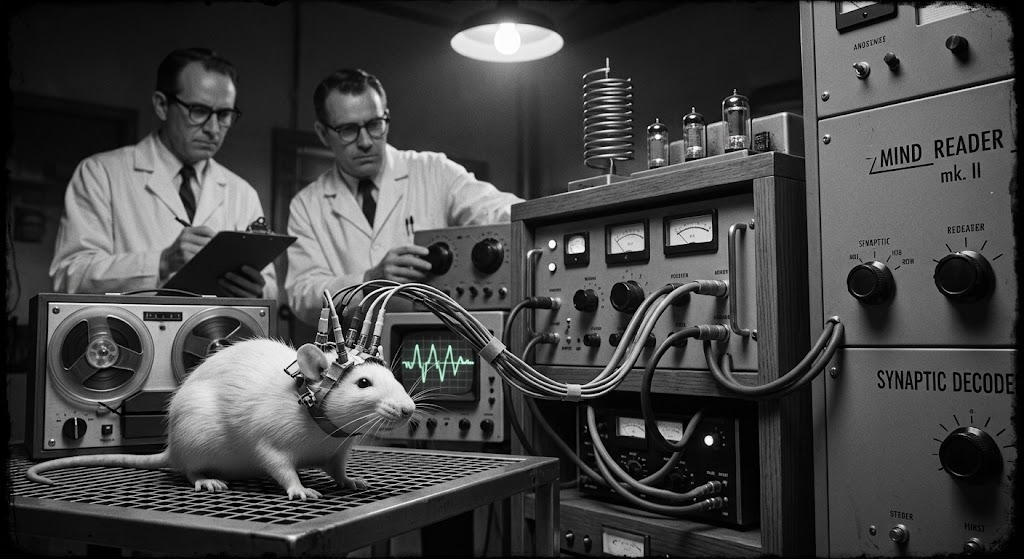
Plexon, Inc., a small neuroscience company located in Dallas, Texas, has agreed to pay $1.7 million in civil penalties to the Bureau of Industry and Security (“BIS”) for the export of equipment, allegedly classified as 4A994.k. and referred to as “Neural Recording Data Acquisition Systems,” to AMMS located in China and placed on the BIS Entity List for its suspected work in “brain-control weaponry.” The equipment is described as a system that “uses electrodes placed in the brains of animals to acquire data and to identify and categorize spikes made by individual neurons in the brain.”

The $1.7M penalty and an associated five-year denial of export privileges was suspended provided that Plexon completed an audit of its export operations and committed no further violations during the five-year period.

There is no indication that Plexon filed a voluntary disclosure of the matter. The phrasing of the BIS documents seem to suggest that Plexon may not have even known that the mind-reading machine went to a company in China on the Entity List.

Pursuant to an existing sales relationship, AMMS ordered the Omniplex systems through Plexon Inc’s Asia distributor. Plexon Inc. then manufactured the systems at its plant in Dallas, Texas and shipped them through its Asian distributor to AMMS

The system was not sent directly to AMMS to Plexon, and there is no indication that the distributor had revealed the end customer. Of course, under the EAR there is strict liability for this violation without regard to intent. Perhaps this lack of intent is the reason for the suspension of penalties.

A more perplexing aspect of the BIS documentation is its reliance on a proposed agency action not yet in effect. The charging documents call the system a “brain-machine interface” and reference an “Advance Notice of Proposed Rulemaking” BIS issued in 2018 and sought comment on whether export controls should be imposed on a number of emerging technologies, including “brain-machine interfaces.” In 2021, BIS issued another ANPRM on “brain-machine interfaces.” As of today, BIS has still not issued a determination that these interfaces should be export controlled. And yet, BIS cites these proposed, but unenacted, determinations and controls in the penalty documents.

Worse, the system involved is not even a brain-machine interface. In the 2021 ANPRM, BIS defined what it meant by such an interface:

BCIs provide a direct communication pathway between an enhanced or wired brain and an external device, with bidirectional information flow.

This system measures neuron activity and operates in one direction only. The system doesn’t send information to the lab rat; it only receives information about neural activity of the lab rat. So, it’s not even a brain-machine interface and even if it were it’s not yet subject to enhanced controls. Still, of course, AMMS’s presence on the Entity List was sufficient for BIS to find a violation.

Permalink Comments (0)


Copyright © 2026 Clif Burns. All Rights Reserved.
(No republication, syndication or use permitted without my consent.)


Aug

24

Well, This Will Bring Iran to Its Knees


Posted by at 6:19 pm on August 24, 2026
Category: Iran SanctionsOFAC

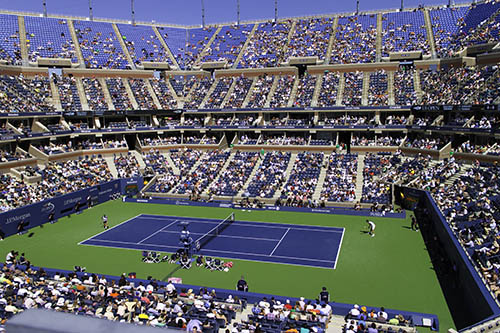
Arthur Ashe Stadium, photo by Clif Burns

As part of the announcement of today’s “Economic D-Day Against Iran,” the Office of Foreign Asset Controls (“OFAC”) announced a revocation of certain general licenses under the Iran sanctions. Most of them have to do with exceptions relating to educational and professional conference activity. Personal remittances are also no longer subject to a general license.

But this one hits home for me and shows that we really mean business about crushing Iran’s economy. A long time ago (and before we were, er, strongly encouraged to go dark), I posted about Adel Borghei, an Iranian tennis referee who showed up at the U.S. Tennis Open and was politely told that the sanctions on Iran prevented him from performing his anticipated role as a line referee at the match. The nice folks at my then firm Bryan Cave agreed we should help Mr. Borghei out in his predicament.

Bryan Cave [agreed] to take on Mr. Borghei as a pro bono client, and we filed a license application with OFAC requesting permission for him to referee in this year’s Open. And, believe it or not, we got a license in record time on the Friday before the Labor Day Weekend. Mr. Borghei, as a result, was able to referee at the Open after all. This article in the New York Times tells the story in more detail, with a great picture of Mr. Borghei arriving at the Open to get started.

Shortly after granting the license for Mr. Borghei, OFAC adopted the now-revoked General License F (“[a]uthorizing certain services in support of professional and amateur sports activities and exchanges”). Leaving aside whether the full panoply of economic sanctions, including the secondary sanctions teased but undisclosed by Secretary Bessent, will accomplish their intended purpose, it seems safe to say that telling Iranian athletes that they can’t come to the United States to play in their sports will have little effect one way or another. After we exiled Iran’s World Cup team to Tijuana (of all places), it is doubtful that Iran footballers are chomping at the bit to come to the United States. Is OFAC thinking about secondary sanctions on countries that allow Iranian athletes to participate in professional sports in those countries? Even if so, that seems unlikely in and of itself to have any impact on the Iranian government and the current conflict.

We should remember that for years we tried to tailor sanctions to minimize harm to the innocent populations of rogue states. There was, of course, a good reason for that.

In other news, several other colleagues and I have accepted positions at Clark Hill.

Permalink Comments (0)


Copyright © 2026 Clif Burns. All Rights Reserved.
(No republication, syndication or use permitted without my consent.)


Dec

24

Reduced Sleigh Team Jeopardizes Christmas in the United States


Posted by at 9:56 am on December 24, 2018
Category: Cuba SanctionsOFAC

Santa Flanked by F-16

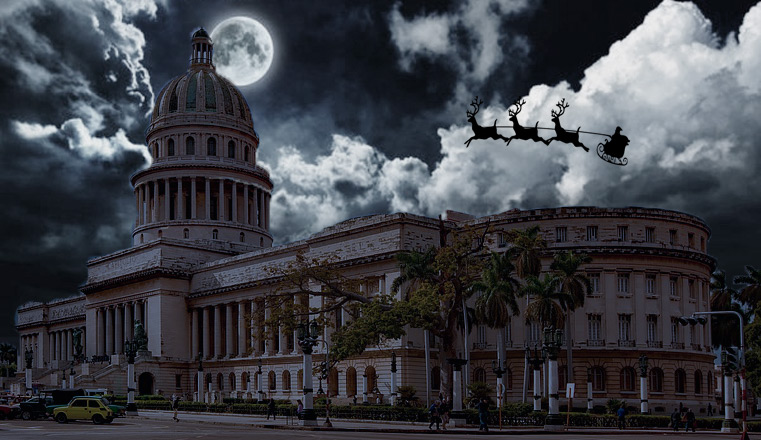
BREAKING NEWS: North Pole spokeself Mr. Elf E. McElfface contacted Export Law Blog with unsettling information. Apparently Donner and Blitzen are under the weather meaning that Santa will have to make his annual Christmas Eve run with six reindeer instead of his normal complement of eight. As readers will recall from the Press Release posted below back in 2016, OFAC’s rules were amended to permit Santa to visit both the United States and Cuba, provided that he went to Cuba first and only gave Cuban children EAR99 gifts. Otherwise, he would be landing in the United States with a sleigh containing toys in which Cuban children had an interest in violation of section 515.207(b) which was not waived by section 515.550(b).

Santa is concerned that requiring the reindeer to fly over the United States from the North Pole to Cuba and then back to the United States will unduly strain the six reindeer that will be making the run. Mr. McElfface pointed out that none of us, including the reindeer who are somewhere around three hundred years old (except for Rudolph who is 262 years old), are getting any younger. So, although Santa and the six healthy reindeer will do their best under these constraints, children in the United States should be prepared that this year there may be nothing (not even a lump of coal) under the tree for them. A GoFundMe campaign is in the works to purchase several tons of coal to be delivered to OFAC should any U.S. children be impacted by OFAC’s Cuba First rules for Santa.

FOR IMMEDIATE RELEASE
MEDIA CONTACT: Elf E. McElfface, eemcelfface@gmail.com or (951) 262-3062

Santa’s Village, North Pole – Santa Claus today, on behalf of himself, Mrs. Claus and the 40,000 elfployees of the Santa Foundation, expressed his gratitude to the Office of Foreign Assets Control for its timely revision of its rules to grant Santa clear authority this year to visit children both in the United States and Cuba. For years, Santa’s efforts to bring holiday cheer to children of both countries has been thwarted by section 515.207 of the Cuba regulations which would prohibit Santa’s sleigh from landing in the United States while toys for Cuban children remained in the sleigh or in landing in the United States if those toys had been delivered to Cuban children first.

Today’s action waives these restrictions if Santa’s sleigh only carries items that would, if they were subject to the EAR, be EAR99 or controlled only for AT reasons. This ends the long struggle over whether teddy bears and other toys — which are not food, medicine, or personal communications devices — could only be delivered to Cuban children in wrapped parcels with the child’s name and address written on the outside and with the statement “GIFT” Export License Not Required” also marked on the parcel package. Notwithstanding the diligence and timely efforts of Santa’s elfployees, compliance with these requirements for each non-naughty child in Cuba has heretofore been impossible.

News of the OFAC announcement led to loud cheers and applause throughout Santa’s Village. Elf E. McElfface, Santa’s spokeself, wiped a tear of joy from his eye as he said to the elves in one of Santa’s workshops that he never believed that this would occur in his lifetime, which was saying a lot given that the average life expectancy of an elf on the North Pole is currently just over 500 years.

As Christmas approaches, Santa said that he was looking forward to this year’s delivery of toys and goodies to the nice children throughout the world more than ever before and reminded children everywhere, both in Cuba and the United States, that they could call his hotline at +1 (951) 262-3062 to leave their Christmas wishes and toy requests.

This press release may include predictions, estimates or other information that might be considered forward-looking. While these forward-looking statements represent the Santa Foundation’s current judgment on what the future holds, they are subject to risks and uncertainties that could cause actual results to differ materially. You are cautioned not to place undue reliance on these forward-looking statements, which reflect our opinions only as of the date of this press release. Please keep in mind that we are not obligating ourselves to revise or publicly release the results of any revision to these forward-looking statements in light of new information or future events.

Permalink Comments Off on Reduced Sleigh Team Jeopardizes Christmas in the United States


Copyright © 2018 Clif Burns. All Rights Reserved.
(No republication, syndication or use permitted without my consent.)


Sep

24

Gun Smuggler Gets 51 Month Library Fine for Overdue Guns


Posted by at 6:18 pm on September 24, 2018
Category: Arms ExportCriminal Penalties

title=So, if you and I went to the Haskell Free Library and Opera House, half of which is in Derby Line, Vermont, and the other half of which is in Stanstead, Québec, we would think of it as a clever gimmick designed to attract tourists to boring little towns with little else to offer. But, were you and I genius criminals, we would see it as a venue for the perfect crime.

Here’s why. If you’re from Canada, you park in Canada, and you can walk to the only entrance on the U.S. side without clearing Canadian or U.S customs. And it’s the same thing on the way out if you go straight back to your car in the parking lot in Canada. So, this brilliant criminal gang cooked up the plan to buy guns in the United States and then leave them in a backpack in the library’s bathroom. Then the Canadian gang member would later retrieve the guns and take them back to Canada without ever having to worry about U.S. or Canadian Customs. Brilliant! Foolproof! Genius!

Of course, never underestimate cops in funny hats and red coats who ride around on horses. They’re much smarter than they appear. A joint operation nabbed the Canadian charged with retrieving the gun-filled backpack from the library’s men’s room. That Canadian, Alex Vlachos, was just sentenced to 51 months in U.S. prison for his role in the transnational library smuggling scheme. He will be given credit for the 43 months he spent in U.S. prison after being extradited to the United States. Do you think he spent much time in the prison library?

Permalink Comments Off on Gun Smuggler Gets 51 Month Library Fine for Overdue Guns


Copyright © 2018 Clif Burns. All Rights Reserved.
(No republication, syndication or use permitted without my consent.)


Sep

13

Entity List Screening Headaches Can Be Costly: The Abbreviated Version


Posted by at 6:51 pm on September 13, 2018
Category: BISCivil PenaltiesEntity List

VNIEFF via http://www.vniief.ru/en/resources/2d252b804af3374599869d5b6de8bab2/12.jpg [Fair Use]BIS recently announced a settlement with Mohawk Global Logistics Corporation for $155,000 ($20,000 of which was suspended if Mohawk behaved itself during a probationary period).   The penalty arose out of Mohawk’s export of items to institutions on the Entity List without the required license.  In both instances, Mohawk screened against the list, but things went wrong.

One of the exports went to the University of Electronic Science and Technology of China (“UESTC”).  Rather than screen against the full name of the university, Mohawk just screened the university’s commonly-used acronym — UESTC.   As a result, it failed to flag the transaction.  BIS, in the charging documents, noted that the address it had for UESTC was a “near-match” (whatever that means) to the address shown for UESTC on the Entity List.  The take-away here, of course, is that exporters should screen entire names and addresses.

One of the other exports was to the All-Russian Scientific Research Institute of Experimental Physics otherwise known as VNIIEF (because the name in Russian – Всероссийский Научно-Исследовательский Институт Експериментальной Физики [Vserossiyskiy Nauchno-Issledovatelckiy Eksperimentalnoy Fiziki] — is abbreviated as ВНИИЕФ or VNIIEF when transliterated to the Roman alphabet — got that?).  Now for this export the transliterated Roman abbreviation resulted in a hit, which, for some unexplained reason, the Mohawk export supervisor simply ignored.

A footnote dropped by BIS on VNIIEF reveals the perils of foreign language names and the Entity List.   The initial listing was for the “All-Union” Scientific Research Institute of Experimental Physics.  When this was updated to the correct “All-Russian” Scientific Research Institute of Experimental Physics in 2011, the common acronym VNIIEF (but not ARSIEP, which is, clearly, a better acronym) was added.  But searches of VNIIEF, the common name of that entity, prior to 2011 would not have turned up anything.   The moral of this story:  don’t search abbreviations or acronyms.

The fine here seems high.   The goods involved were EAR99 items and worth, in total, about $200,000.  A license probably would have been granted if requested so there’s no palpable harm to national security here.  And Mohawk tried to screen but just did not do a very good job of it.  However, it’s not like they, like many exporters, did not even try to screen the recipients.   Granted the inexplicable activity of the Mohawk supervisor in overriding the hit for VNIIEF would permit some aggravation of the penalty.  And perhaps the failure to screen addresses when they had a “near match” of the correct address further annoyed BIS.  But it seems to me here that BIS is fining incompetence rather than malice.


https://efoia.bis.doc.gov/index.php/documents/export-violations/export-violations-2018/1193-e2561/file

Permalink Comments Off on Entity List Screening Headaches Can Be Costly: The Abbreviated Version


Copyright © 2018 Clif Burns. All Rights Reserved.
(No republication, syndication or use permitted without my consent.)


« Previous posts |